Skip to content
0
  • Categories
  • Recent
  • Tags
  • Popular
  • World
  • Users
  • Groups
  • Categories
  • Recent
  • Tags
  • Popular
  • World
  • Users
  • Groups
Skins
  • Light
  • Brite
  • Cerulean
  • Cosmo
  • Flatly
  • Journal
  • Litera
  • Lumen
  • Lux
  • Materia
  • Minty
  • Morph
  • Pulse
  • Sandstone
  • Simplex
  • Sketchy
  • Spacelab
  • United
  • Yeti
  • Zephyr
  • Dark
  • Cyborg
  • Darkly
  • Quartz
  • Slate
  • Solar
  • Superhero
  • Vapor

  • Default (No Skin)
  • No Skin
Collapse

The Flying Dutchmen

Global Moderators

Private

Forum wide moderators

Posts


  • I Owe Cody This One
    S snoopy

    I Love Deutsch's Ideas. I Still Think We're Pinballs.

    I want to say something up front: I'm not here to dunk on David Deutsch. I've read The Beginning of Infinity (thanks for the copy, Cody). The stuff on good explanations, on knowledge as the thing that makes people and ideas hard to kill, on optimism as a discipline, genuinely great. I'm a fan.

    But I think the free will part is where the whole framework gets used to protect a conclusion Deutsch wanted to be true, rather than one his own method would actually deliver as true. And I think a lot of people in his orbit have accepted it a little too easily, because it's flattering and because he's right about almost everything else.

    So let's poke at it.

    The chain nobody has broken

    Here's my argument (well, it's a well known one held by smarter people than me but it's the one that I cannot shake as of yet). It's not subtle and I don't think it needs to be:

    Quantum level: particles do what the rules make them do. No choosing. Classical physics: same, laws all the way down. Chemistry is physics with extra steps; molecules react the way their structure and energy states force them to. DNA, RNA, cells: chemistry in aggregate, doing what chemistry does. Brains: organisms' most elaborate trick, but built from the same atoms, running on the same rules, no exemption clause anywhere in the stack (in other words, clean computer code).

    So when a brain "decides," what physically happened? A configuration of neurons, shaped entirely by genetics and every experience that configuration was ever exposed to, ran an electrochemical cascade that did, at every single step, what physics and chemistry compelled it to do. It felt like a choice. Feeling like a choice and being one are not the same claim, and nobody in the Deutsch camp has ever shown me the actual physical mechanism where a real fork opens up: a point where the next state isn't simply what the prior state made inevitable. They gesture at a different level of description instead. That's not the same thing as finding the fork.

    And yes, this cuts both ways, and I mean for it to. Neither of us "chose" our position on this. David Deutsch didn't select free will as his view any more freely than the copper atom selected its spot on the statue. He's a pinball who writes very good books.

    The statue trick, and why I think it's a dodge

    The best comeback I know is the statue: why is there a particular atom of copper at the tip of a bronze statue's nose? You could trace it to the Big Bang (true, but useless). Or you could say: there was a war, a leader, a grateful public, a sculptor, a foundry. That's a good explanation in Deutsch's own technical sense, hard to vary, and it's where the real explanatory content lives. Free will, the argument goes, works the same way. Redescribing a decision in terms of neurons is worse, not more true.

    I think this is a sleight of hand, and I want to say exactly where. "Good explanation" was built as a standard for which description is useful and informative. Somewhere along the way it got quietly promoted into a standard for what's metaphysically real, and nobody defending free will this way seems to notice the promotion happened. Those are two different jobs. A weather forecaster's model is the "good explanation" for whether it'll rain tomorrow (nobody's going to model every air molecule), and that in no way implies the atmosphere has genuinely open, uncaused branch points where it "chooses" to rain. Usefulness of a description is not evidence that the underlying process wasn't fully determined. If you think it is evidence, that's the actual claim you have to defend, and I haven't seen it defended. I've seen it assumed.

    So here's the direct question, and I'd like an actual answer rather than the statue again: was the sculptor's decision caused, given the exact prior state of his brain and body and history, or wasn't it? If yes, you've just conceded the pinball. If no, you need to point to the physical mechanism that isn't caused, not a better vocabulary for describing a fully caused process.

    The two things I won't pretend

    I'll grant two things, because a Socratic argument that never concedes anything isn't Socratic, it's a monologue with question marks.

    Quantum mechanics has real randomness in it, not merely complexity we haven't modeled yet. Fine. But randomness doesn't buy you free will: a decision caused by a coin flip in your skull isn't freer than one caused by a falling domino, it's just less predictable. Anyone reaching for quantum indeterminacy to rescue free will is smuggling in the same confusion I just accused the statue argument of: mistaking "not determined" for "chosen by me." Those aren't the same thing, and I don't think either side gets to have it both ways.

    And no, I'm not saying the system of making choices is fake or that you should stop planning your life. Whatever this system is, it clearly weighs options, regrets, plans ahead. That machinery is doing real work. "It does real work" doesn't settle whether it was free, though, and I think that's exactly where a lot of people quietly stop asking questions because the alternative feels bad.

    Where I actually land

    I still think the pinball is the best explanation we have, not despite Deutsch's own standard, but by it. It's the account that's hardest to vary while covering every piece of evidence, from quarks to Churchill's nose to the sentence I'm typing right now. The "reasons and creativity" story is real and useful at its own level of description. But usefulness isn't an exemption from causation, and I think Deutsch has let a good rule of thumb about explanations quietly turn into a metaphysical escape hatch, because the alternative (that even his book was just where the pinball landed as it set of multitudes more) is uncomfortable to sit with.

    If you think I've mangled the argument, don't hand me the statue again. Show me the actual fork in the physical chain: the place where the next state of a brain isn't simply what the prior state made inevitable. I'll go looking with you. But I'm not holding my breath.
    Reality

  • I Owe Cody This One
    S snoopy

    This has been a word document (actually a LibreOffice doc) for a few years now. Unfinished, unpolished and quite frankly, I didn't feel compelled to finish it. Cody gave us all a copy of DD's book some time ago and I thoroughly enjoyed it but at some point at a game day at Cody's house, I remember the convo heading into "free will" territory. More often than not, I don't tend to assert myself as much as I'd like when we're physically together because there are 4 of us vying for speaking time simultaneously on any given topic. So I started writing the following down with the intention of giving it to you all. But "this and that" put it on the back burner for more than a few years.

    Anyway, I decided to get it done today. (The only AI used was as a thesaurus. The entire post is my writing)...

    Reality

  • The Stan Plan
    S snoopy

    I like that idea.

    Games

  • The Stan Plan
    J Josh

    Game design studio sounds fine. We need a logo. Also I think we should scrap flyingdutchmen.online and get theflyingdutchmen.games since we’re going to end up paying the same anyway.

    Games

  • The Stan Plan
    S snoopy

    @Josh said:

    Even the nutshell is daunting. It's a bit unclear what the goal is. Are we trying to establish ourselves as a service provider for publishers? For game creators? Or are we seeking services ourselves?

    It doesn't matter. What does matter is that being a team of 4 individuals with complimentary skills that make up a "studio", that has done what it claims to do with regard to game development in early phases, shows that we are not fucking around. We don't give a shit if anyone contacts us for services. If they do, it will most likely have to do with digital versioning of projects, which I'll gladly do, or possibly some oddly shaped game pieces needing to be 3D printed(Cody is free to take it and charge what he wants or purposely overcharge to discourage the order). But again, getting business is not the point.

    @Josh said:

    This doesn't seem like something that happens normally in business.

    It does. Even competitors work together (See Anthropic, Google and XAI recently). It happens less often the bigger the entities and more often the smaller the entities. I have loads of stories of when collaboration helped my businesses and where my businesses helped another business. But again, this is not the point.

    @Josh said:

    Normally, creators seek the services of publishers or publishers seek the services of manufacturers. I'm not saying it couldn't happen.

    Creators, while they do seek the services of publishers, they have a lot of work to do on their own before they get to that phase/stage. Need proof? That's us. Is there a niche market for what we are good at and what we are doing for our own titles? Maybe. But again, this is not the point.

    @Josh said:

    Publishers don't need a 4-man playtesting agency. Any games they have in development would already have been thoroughly playtested.

    Not true of smaller, indie publishers who are basically just people like us with a bit more money than us doing "self" publishing. But again, not the point.

    @Josh said:

    This time around, I really think we need to approach this from a perspective of educating ourselves about how things work instead of trying to explain what we think might be worth a shot.

    We shall educate ourselves over the course of the next 7 months. That is part of the plan.

    @Josh said:

    If anything, I think we could call ourselves a design and development firm and offer prototyping services to other game creators. But that wouldn't have anything to do with getting KRED published.

    This is the point. And yes it does have everything to do with KRED. That gives us CRED when we shake hands with our first publisher. This is the entire point.

    In summary, none of the questions Josh raised are wrong. They're just not the point. The point is singular: get KRED in front of a publisher and be taken seriously when we do.

    Everything else, the studio identity, the complementary skill set, the dev-phase services angle, is infrastructure for that moment. It's not a business pivot. It's not a new revenue stream we're chasing. It's the answer to the question every publisher is silently asking when a stranger walks up to their table: "Why should I believe you?"

    Games

  • The Stan Plan
    J Josh

    I'll reiterate the concerns I expressed on Saturday so everyone is on the same page.

    @snoopy said:

    So our plan, in a nutshell, is to not only do that work for Kred, but to establish that we are in a position to offer services that help aspiring game creators, as well as small to mid-sized publishers, with "road to publish" services.

    Even the nutshell is daunting. It's a bit unclear what the goal is. Are we trying to establish ourselves as a service provider for publishers? For game creators? Or are we seeking services ourselves?

    @snoopy said:

    exchange of services

    This doesn't seem like something that happens normally in business. Normally, creators seek the services of publishers or publishers seek the services of manufacturers. I'm not saying it couldn't happen. But, if we think publishers are too busy to look at our game and then we're asking them for more time to explain why they should take a chance on this other idea we've got, I'd only expect a, "We'll have someone call ya' kid but don't wait by the phone."

    @snoopy said:

    invite them to contact us if they need playtesting of any games they might have in development

    Publishers don't need a 4-man playtesting agency. Any games they have in development would already have been thoroughly playtested. This time around, I really think we need to approach this from a perspective of educating ourselves about how things work instead of trying to explain what we think might be worth a shot.

    I don't think we should offer playtesting as a service to publishers and, although we may be able to show off a couple of online games that they can test drive, I don't think we're coordinated enough to call ourselves an online development team either.

    If anything, I think we could call ourselves a design and development firm and offer prototyping services to other game creators. But that wouldn't have anything to do with getting KRED published.

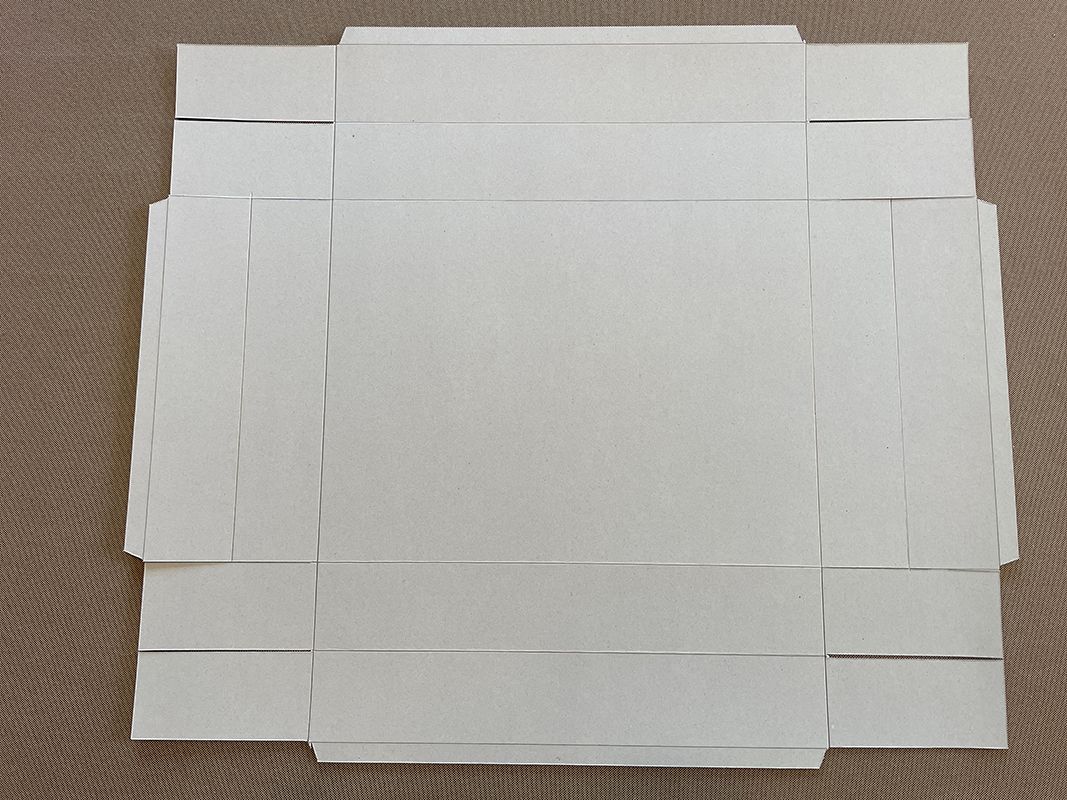
    As far as that goes, we need extensive play testing, intimate knowledge of every aspect of the game, well rehearsed talking points and a kick-ass sell sheet. I got a reply from Custom Box Makers and, if we can get 8 boxes with inserts, the rest will be a piece of piss. We just need to set up a big play test fest.

    Games

  • The Stan Plan
    S snoopy

    Generated Image June 07, 2026 - 2_30AM.jpg

    Games

  • The Stan Plan
    S snoopy

    Plan that Josh and I mulled over is here. This is not set in stone but is meant as a starting point for us to discuss in order to get shit done in support of Kred getting into publishers' hands in the best possible conditions for success.

    https://montoyahome.com/kred/plan2027/plan.pdf

    Games

  • The Stan Plan
    S snoopy

    By now, you guys have seen my "I got a plan, Stan!" comment in our Line thread. Some of it was discussed last Sunday with Josh. I intend to elaborate here and answer any questions.

    What the plan is: A road map and checklist that will expand and amplify our perceived value beyond just the possible future revenue of a game we want to publish.

    Why the need for a plan like this: Publishers of board games invest hundreds of thousands of dollars between marketing, manufacturing, and distribution on a single game title alone, so obviously they don't willy-nilly take just any board game on as an investment project. They want as close to a "sure thing" as possible and as much of the "hard" work done for them before even considering a new game and whether or not it fits in with their existing product line and company mission. So our plan, in a nutshell, is to not only do that work for Kred, but to establish that we are in a position to offer services that help aspiring game creators, as well as small to mid-sized publishers, with "road to publish" services.

    What the plan is not: It is not any specific commitment, long-term or otherwise. This plan does not require much more effort or work than we are already doing for Kred. The fact that we offer services does not mean we get any takers. If we do, we'll price accordingly when the time comes. For now, that is not the point.

    What is the point? Imagine yourself as a game publisher. You're always on the lookout for that next big title that will translate to a decent profit and add further value to your product line. You're running a booth at a board game event and suddenly you are cold-approached by some guys with a game that looks interesting and possibly might fit with what you're looking for. Maybe they seem to have crossed their t's and dotted their i's, brought a nice prototype, a sell-sheet, etc., and even present well — but you don't know anything about these guys. You're probably thinking you don't have time to look into their game in detail.

    Then one of them hands you a business card and says they offer development phase services for creators of tabletop games.

    Instantly, what does this tell you? I won't make a list here, but suffice to say it answers a lot of questions about these four guys. At the very least, you know they've invested a lot — time, work, and money — in their game development already, they've done their homework, and most likely know the position a publisher is in. These guys are not here to waste your time. You just may give their game a deeper look when you get home.

    What's happening here? At the very least, networking. Exchanging business cards can lead to further contact down the road for other projects, referrals to other publishers, and even a source in the business that can be contacted for inquiries. In the best case scenario, a relationship with a publisher and possibly an exchange of services. Regardless of publishing our game, publishers we build relationships with can send us a bit of business when someone prematurely pitches a raw, underdeveloped game to them and is in need of some of our services.

    What else are we doing at the Osaka event? Whether or not we get Kred looked at by any publishers, let's emphasize that we play games — a lot of games (we can prove it by showing our stat-app page) — and invite them to contact us if they need playtesting of any games they might have in development. This we'll offer free of charge.

    Our webpage for our services should speak volumes about who we are and what we do. Josh and I have said we are willing to put our mugs on the site in the developer profile page. Hopefully you guys are as well.

    https://montoyahome.com/tfdstudios/index.html

    (The website is merely a placeholder with a general scaffold. No need to nitpick on words and design just yet — there's lots to be done here!)

    In order to get Kred on the proverbial map, we're going to need to make our presence known through social media, participate in several tabletop game communities, and make a good name for ourselves. Branding is important, and filling a niche with "development phase" services under the TFD name makes our quest to publish Kred more achievable by establishing credibility, growing our audience, and creating value long before the game reaches the market.

    Games

  • Cody's Bill Maher YouTube Video
    C cozy

    This reads like suicidal empathy for terrorists, like defending Russia’s invasion of Ukraine. But I’m sure you’ll correct me—without proposing what to do about radical Islamism.8d858e0f-0519-414d-adf7-a6b0be46a502-image.jpeg

    Politics

Member List

C cozy
S Skull
S snoopy
J Josh
  • Login

  • Login or register to search.
Powered by NodeBB Contributors
  • First post
    Last post